
Economics & Reason: No One is Flying the Plane?
Today’s article is largely glass half empty. Twenty-two states across the country had no chief data officer (CDO) according to research by the Beeck Center for Social Impact and Innovation at Georgetown University. Their recently released State Chief Data Officer Tracker shares several pieces of important information.
- The first of which is that almost half of states don’t have an acting CDO - 22 states are either vacant or non-existent where one person, or an office, that is tasked with managing state data or aligning data across the state to improve service delivery. Wow. Twelve states do not have enabling legislation or a state office for a CDO to lead.
- Ten more states have an office for a CDO to lead, but the seat is currently vacant. Some churn across states makes sense – but for 20% of all state CDO roles to be vacant suggests that it isn’t a priority or has found itself hung up in politics or an approval process that is limiting the efficacy and efficiency of the office.
- Further bolstering the low priority status of CDOs in many states is their budget. Beeck’s analysis shows that the average budget for a CDO office is less than $1 million annually. This suggests they may not be getting the resources needed, but they are also high return offices because they are low resource commitment. Yet, twelve states are still not making the investment at all.
What might a state chief data officer do in particular? They are likely charged with going beyond any single silo of data to find insights across state government and state information. The CDO is likely the person who would help to link information from disparate sources - including wage records, social service utilization, public health records or criminal justice information to develop insights about how different services in the state interact with each other and how residents are interacting with various systems.
Chief Data Officers are similarly charged with finding new frontiers of information for states to consider – it is not just organization and linking of what a state already collect, but also identifying the information that a state needs but doesn’t have. Some states have highly sophisticated labor market information leaders (for example, the Mississippi NSPARC office is a strong labor market and education data analysis team) or a set of public health experts that understand state health utilization, but lack the glue between systems. CDOs can close that gap.
So when you don’t have a CDO, it is kind of like not having a pilot or a conductor. You need someone who knows how the current systems operate and interact, and who can help drive to where it needs to go.
White Paper of the Week
This week’s paper is the New Jersey’s Teacher Workforce: 2025 Legislative Report from the Heldrich Center for Workforce Development at Rutgers University.
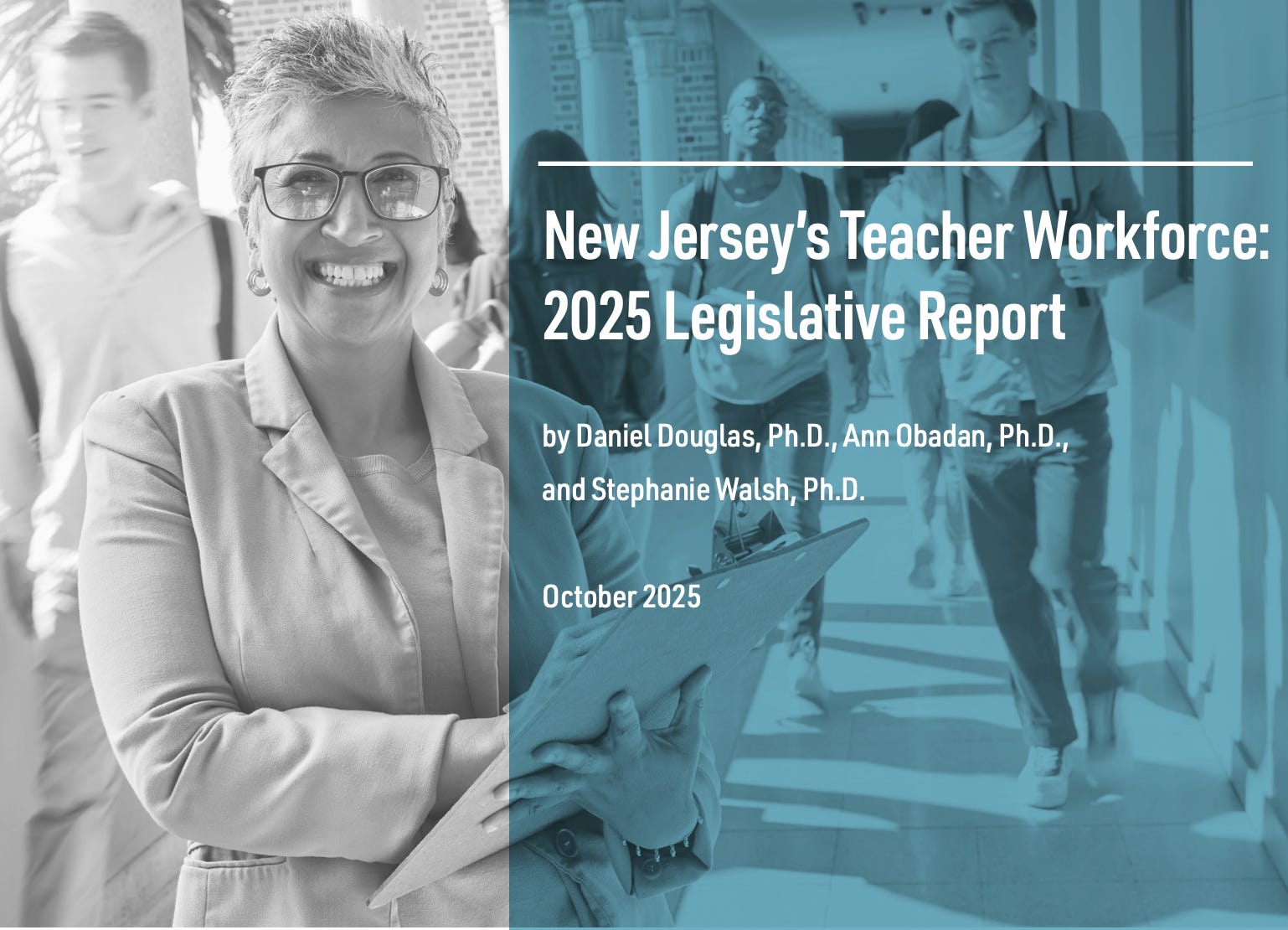
The paper examines trends in the teacher workforce across the state. Like many states in the country, parts of New Jersey have had to address staffing shortages and the report looks at trends in staffing and the employment conditions that teachers experienced, including work outside of education – probably some type of “moonlighting” to supplement income. The authors found that those that worked outside of education earned 6% less than their counterparts on average within education and that the outside work essentially closed that gap.
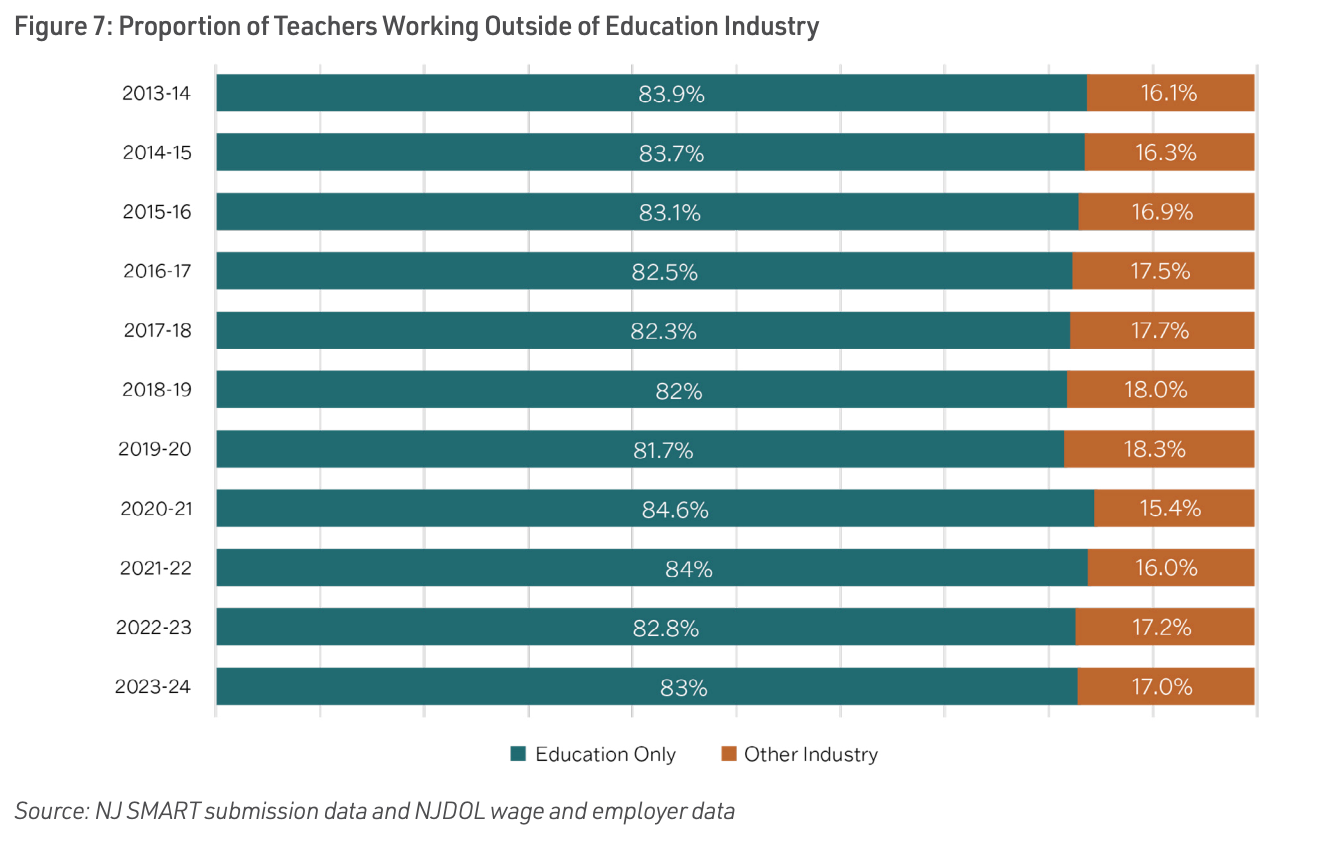
This report shows the power of seeing more broadly what happens to workers and the power of integrated data systems. New Jersey has these insights because of sustained investment and leadership in building high quality data systems.
The office of the CDO in New Jersey can be seen here.
Song That Kept Me Working This Week
Khawuleza by Hugh Masakela, originally recorded by Miriam Makeba
Until 1961, it was illegal for Black South African to drink alcohol. The Apartheid government did not allow it - but Blacks in South Africa drank anyways in illegal drinking houses called shebeens. The shebeens would often be raided by the police – and it was a corrupt relationship because the police were often the ones who were supplying booze to the shebeens (this is all paraphrasing Masakela).
“Khawuleza” is a Xhosa word that directly translates as “hurry up.” When children would see the police coming they would take pebbles and throw them on the roofs of homes, businesses and yell “khawuleza mama!” it meant “mama hide the booze, the police are coming.”
To me the song and the song’s inspirations are reminders that life continues and there are joyful moments, even in repressive regimes. A simple act of defiance can be enjoying life, ignoring inequitable laws, and protecting your family, friends, and loved ones.
My kids will attest to the fact that I listen to this song a lot, maybe too much in their opinion.
Makeba’s original version is much harder to find (there is one she sings with Harry Belafonte that is easier to find on streaming services).
Here is a live recording by Makeba in 1966 - it is pretty incredible.
Thanks everyone for reading. Have a great week. More soon.
Read All Economics & Reason Issues & Subscribe on Substack