
News
Articles and op-eds featuring Burning Glass Institute research
Featured Articles

DISCOURSE: The Economics of Skill Development
While economics is often called the dismal science, there is cheerful news coming from an area of study called the economics of skill development. This field analyzes the relationship between hard and soft skills—our cognitive and noncognitive domains—and how these domains affect wages and labor-market success. The good news is that, beyond simply mapping these relations, this discipline also identifies skills across industries and careers that boost upward mobility and promote pathways to opportunity. And its findings on the importance of soft skills such as communication and cooperation for wage progression have implications for school and life.
Unfortunately, most American K-12 schools have not yet caught on to the importance of skill development and do not teach foundational skills to their students. But these new insights can help K-12 educators understand what foundational skills young people should learn before they graduate from high school, whether they go into the workforce or college. These insights also should guide the development of an opportunity program for young people—one based on the complementary relationship between hard and soft skills, between the cognitive and technical domains and the social relationships needed for success.

SHRM: How Employers Should Respond as Older Workers Retire at Record Speed
aby Boomers are getting older. Born between 1946 and 1964, the youngest members of this generation are turning 59 this year. The generational shift is being felt throughout the economy—and the workforce.
According to Moody's, an estimated 70 percent of the drop in labor force participation since the end of 2019 was due to the retirement of aging workers. Baby Boomers are exiting the labor force at a higher rate than any other population; the labor force participation rate for Americans over age 55 has fallen 1.5 percentage points since before the pandemic.
In addition, research from Gad Levanon, chief economist at The Burning Glass Institute in New York City, shows that working-age population growth is slowing to a halt for the first time in U.S. history, a trend that will continue through the rest of the decade.

Michael Horn: Ranking Colleges Based on Different Career Pathways
Which colleges best set up its graduates for careers in finance? Or data science? Or law? It turns out that different schools really help students pursue careers in different fields. And other schools, not so much. Our guest, Matt Sigelman, from the Burning Glass Institute, helps breakdown the latest research that they published with the Wall Street Journal on the topic and helps you know what it all means—plus other insights on the connections between education and careers.
For those who have been in the worlds of education and workforce, you probably know Matt and the great analytical work he has led to help build the field of labor market analytics. This conversation is the first in a semi-regular set that Matt and I plan on having each year to help share insights from the latest in research that the Burning Glass Institute does and help share why it matters.

INSIDE HIGHER ED: Legislating an Honest Look at College Cost
June 7, 2023
By Liam Knox
The Ohio State House of Representatives passed a higher education bill last week to ensure that colleges are transparent in their communications about the cost of their degree programs and the returns their graduates can expect on that investment.
Ohio House Bill 27, which passed by a vote of 88 to 1 Thursday, would require public colleges and universities in the state to send admitted students who qualify for financial aid a one-page “financial cost and aid disclosure form” in their aid packets. The form would offer a full breakdown of the net cost of a degree, including the expected duration of the student’s financial aid package, a clear definition of grants versus loans, and the minimum monthly loan payments required of the student after graduating. It would also mandate that institutions share with admitted students postgraduation data on outcomes…
Matt Sigelman, president of the Burning Glass Institute, a nonprofit focused on workforce research, said he recognized lawmakers could have hostile motivations for introducing transparency bills in an age of increasing state disinvestment and right-wing hostility to higher education funding.
But the data, he said, are on higher ed’s side. On average, graduates with bachelor’s degrees earn 84 percent more over their lifetimes than people with only high school diplomas, according to a study from the Georgetown CEW. And if institutions or programs do underperform for students, making consumers aware of that is a worthy public service when the data are presented in good faith.
“Yes, this is being driven by hostile legislatures. But I think everything that we’ve seen in the data for the most part shows that college degrees are worth it,” Sigelman said. “If lawmakers want to bring accountability measures to prove that, I say game on.”

FORTUNE: Your early childhood skills will become more important to landing a job than your degree, says a Harvard future of work professor
June 3, 2023
By Jane Thier
If you haven’t gone to therapy yet, here’s your sign: Addressing your childhood trauma could be critical for your career.
Skills-based hiring is on its way to becoming more valuable than a degree—and that’s coming from the very top. College degrees are losing their prominence in the hiring process, and with the rapid adoption of generative A.I. like ChatGPT, non-degree holders can expect plenty more tailwinds to come, says Joseph Fuller, a professor of management at Harvard Business School who co-leads the school’s Managing the Future of Work initiative.
“Do I think white collar work will inevitably require a college degree? Absolutely not,” Fuller tells Fortune in a recent interview. “It will require certain types of technical or hard skills not necessarily indicated by college.”
Plus, many jobs will continue requiring social skills “in significant measure,” Fuller went on—that could look like charming clients, listening actively in meetings, and maintaining strong relationships. According to a 2015 working paper from the National Bureau of Economic Research, nearly all job growth since 1980 has been seen in jobs that are “relatively social-skill intensive.” On the other hand, easily automatable jobs—those calling for ample analytical and mathematical reasoning and minimal social interaction—have fared poorly.
Eight years on, that’s proven to be prescient, and the trend towards skills is only gaining steam. Executives from IBM, LinkedIn, Penguin Random House, Apple, and Google have all heralded skills-based hiring as a welcome virtue—especially in a tight labor market where finding talent in new areas is critical. As of November 2022, just 41% of U.S.-based job postings required at least a bachelor’s degree—a drop from 46% in early 2019, according to an analysis from think tank Burning Glass Institute reported by the Wall Street Journal…

FORBES: Future Of Work Summit 2023: Leaders Talk Change In The Workplace
June 1, 2023
Upskilling Amid Economic Uncertainty
Change is constant in the world of work. From rolling layoffs in the technology sector and new technologies such as OpenAI’s ChatGPT to hybrid work models and new upskilling efforts, disruptions are constantly reshaping how, where and why we work.
“Much has changed, but disruption is still the defining characteristic of work today,” Forbes Senior Editor Jena McGregor said on stage in her opening remarks at this year’s Forbes Future Of Work Summit. “The future of work is happening now.”
There, future of work leaders—including Slack CEO Lidiane Jones, social media creator Corporate Natalie and U.S. Equal Employment Opportunity Commission Chair Charlotte Burrows—took the stage at Forbes On Fifth in New York City Thursday to discuss changes, insights and ideas around the workplace…
“Even in a down market, we can’t get enough skills in our organizations,” said IBM’s Nickle LaMoreaux. The CHRO joined AT&T Senior EVP of Human Resources Angela Santone and Burning Glass Institute President Matt Sigelman on stage Thursday to discuss upskilling workforces and AI’s impact on hiring.
With new AI technologies such as Google’s Bard and OpenAI’s ChatGPT, “you’ve got tools now that are incredibly capable—our expectations are going to be that much higher,” Sigelman said. “And that’s where skills come into the room.”…

WALL STREET JOURNAL: Yes, a College Degree Is Still Worth It
May 20, 2023
By Jeffrey Selingo and Matt Sigelman
This month, even as some two million bachelor’s degrees are awarded at college commencements in the U.S., the credential itself faces an identity crisis.
In the last year and a half, Maryland, Pennsylvania, New Jersey and Utah have stopped requiring a four-year degree for most jobs in their state governments. The private sector has also moved toward skill-based hiring, with Google, Apple, IBM, Delta and General Motors, among others, dropping the four-year degree as a prerequisite for many positions. Even the federal government is urging its agencies to fill vacancies based on job-seekers’ skills rather than on their college credentials.
Some of these moves are the result of a tight labor market after the pandemic, but the push to lower the degree barrier long predates Covid. Its advocates see it as a way to remedy structural inequities in the job market and to combat the “degree inflation”—requiring a bachelor’s degree for jobs that historically haven’t—that accelerated after the recession of 2007-09. According to a report published last year by the Burning Glass Institute, degree requirements became significantly less common in 46% of middle-skill jobs and 31% of high-skill jobs between 2017 and 2019—a major reset in employers’ assumptions about the necessity of a diploma.…

INSIDE HIGHER ED: College Going Is Changing. We need better Data.
May 12, 2023
By Joe May and Mark Schneider
What it means to go to college is changing. The pandemic dealt a once-in-a-lifetime shock to the system and, even as it ebbs, students haven’t returned to degree programs in the same numbers as before. They won’t anytime soon, according to mounting evidence.
Yet working Americans without college degrees increasingly are seeking out short-term higher education options. National surveys have shown that throughout the pandemic, Americans preferred nondegree programs and short-term skills training to meet their educational and professional needs. These credentials are designed to lead to in-demand jobs in fields like information technology, advanced manufacturing and health care, and to do it quickly—in six, eight or 10 weeks, not years. Popular options include online certificates, apprenticeships and industry credentials.
Would-be students say they want these options and are showing up on college campuses to pursue them. In Indiana, for example, the community college system has seen substantial growth in the number of students taking advantage of the state-funded Workforce Ready Program, which supports students pursuing short-term, work-aligned credentials. Short-term programs also are popular in states like Virginia, Texas and Colorado. And Monty Sullivan, president of Louisiana’s two-year college system, recently told Congress that even as two-year colleges experience declines in traditional degree enrollments, they’re seeing increasing demand for shorter programs. “Students are showing up at our doorstep, in long lines, because they want to be a part of a short-term workforce opportunity that provides that value proposition … that gets them into the workforce in a shortened period of time,” Sullivan said.
People have gotten the message that good jobs—today and in the future—require education beyond high school. But many expect college to look different and be available in shorter bursts. At the same time, the fast-changing economy and tight job market is prodding employers to get more creative in hiring workers. And Congress may soon throw its weight behind shorter education pathways, via bipartisan efforts to create “short-term” Pell Grants to support credentials that can be completed in as little as two months.
Even as Americans are seeking out career-connected education paths, we don’t know enough about which options make good on that promise. The U.S. Department of Education doesn't collect meaningful data on short-term programs, and that makes it difficult for both policy makers and the public to fully understand the return on investment produced by these credentials. To protect both students and taxpayers, it’s essential that the federal government and states gather and share data on the ROI of workforce programs in a systematic way.
Pinning down ROI is a challenge across all of higher education, but it is particularly difficult for short-term and noncredit programs. Organizations like the nonprofit Burning Glass Institute are beginning to track the results and returns of short-term programs for both individuals and employers, as are states like Iowa, Indiana, Texas and Virginia. However, this shouldn’t be scattershot. The federal government needs to begin to establish policies and best practices for collecting these important data on noncredit, nondegree certificates…

FORBES: Degrees Are Just A Container — They Don’t Matter, But What’s Inside Them Certainly Does
May 10, 2023
By Rachel Romer and Allison Dulin Salisbury
When someone tells you degrees are dead, here’s what they really mean.
Sit in on the World Economic Forum’s annual meeting in Davos, the Aspen Ideas Festival, TED Talks, or any other events where the world’s tech and business elite gather — and you could be forgiven for thinking that the degree is dead.
CEOs of Fortune 500 companies declare it from the stage. The audience nods knowingly. We know, we’ve been there.
But no, the degree is not dead. Nor should it be.
Yes, a growing number of companies, as well as entire states, are dropping degree requirements for all but jobs where they’re strictly necessary. And organizations like OneTen and Opportunity@Work are leading national campaigns to keep that trend going.
At Guild, we applaud that work: To meet future talent needs, companies need every qualified worker they can get, no matter where they obtained the knowledge and skills — on the job, in their community, in a certificate or short-term training program, or through a college degree. And the move away from degree requirements is wonderful news for the 70 million Americans who have the skills for higher-paid work in today’s economy, but may struggle to access it because they lack a bachelor’s degree.
Eliminating degrees from the hiring process is critical — but employers must also support formal learning for their employees once hired.
When someone tells you the degree is dead what they’re really saying is that they need employees with more concrete and future-proof skills — and it doesn’t matter what type of container those skills arrive in.
Here’s why:
In a groundbreaking study, Georgetown University found that roughly 90% of jobs in the fastest growing industries require some form of postsecondary education — including healthcare, roles in technology and STEM, community services and arts, and education. All of those roles require specific skills. Historically, employers used degrees as the signal to understand what skills an employee might hold. Now, skills may arrive in the form of certificates, credentials, on-the-job learning, you name it.
But as we adjust to this seismic shift, many folks will still default to degrees as the request signal for a while to come: A major analysis of the “degree reset” by researchers at Harvard University and the Burning Glass Institute found that among middle-skill and high-skill roles, about half were jobs that are highly unlikely to ever drop the degree requirement.….

Gitlab Foundation Makes its First Grant to BGI and JFF
April 17, 2023
PRNewswire
$2.9M grant for Jobs for the Future and the Burning Glass Institute to expand Educational Quality Outcomes Standards as a tool to help workers, learners, employers, and policymakers make sense of rapidly growing landscape of postsecondary credentials
BOSTON, April 17, 2023 /PRNewswire/ -- Today, the GitLab Foundation—formed by GitLab, Inc to improve people's lifetime earnings globally through access to opportunities —has announced its first major grant of $2.9 million to national nonprofit Jobs for the Future (JFF) in collaboration with the Burning Glass Institute.
The grant will be used to significantly expand the Educational Quality Outcomes Standards (EQOS) framework to measure education and training programs based on employment and earnings outcomes. JFF and the Burning Glass Institute will work together to incorporate new measures of racial, gender, and income equity—and create consumer and employer friendly applications that make it easier for job seekers and employers in the U.S. to assess a wide variety of education and training programs.
WALL STREET JOURNAL: Top Colleges for High-Paying Jobs in Finance
April 11, 2023
By Kailyn Rhone
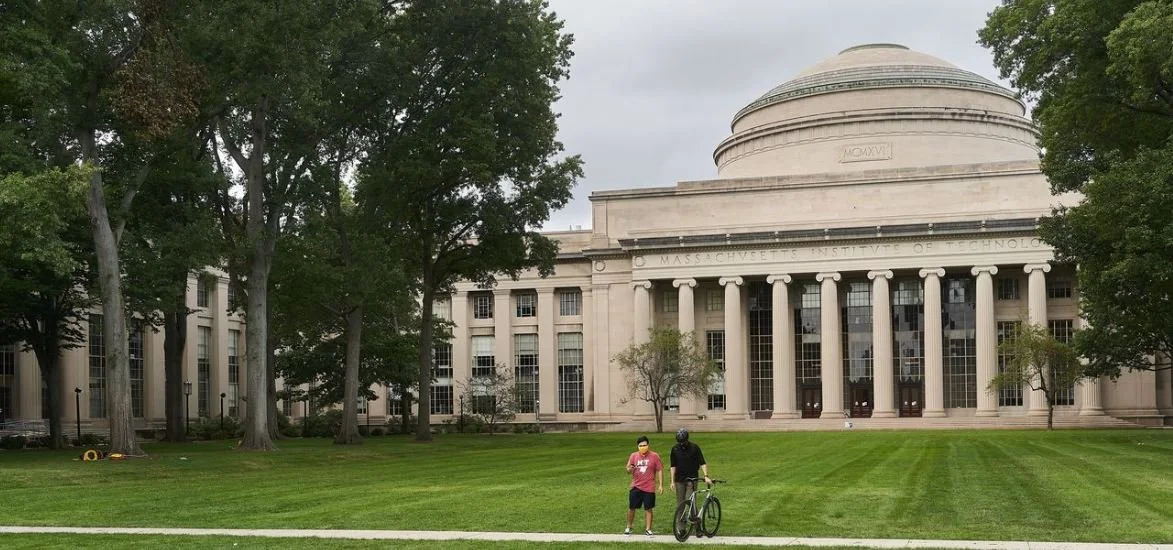
Graduates of the Massachusetts Institute of Technology who go into finance earn higher salaries than other schools’ graduates in the field, according to a ranking compiled by the Burning Glass Institute, a nonprofit that researches employment trends.
The top public university for finance salaries in the new ranking is the University of Virginia.
The ranking aims to answer the question: If the choice of career and the number of years in the field are the same, what effect does the school somebody went to have on their salary?
The answer for graduates of MIT, according to the ranking, is a premium averaging more than $48,000 a year over 10 years compared with what the median B.A. graduate working in finance earns, according to Burning Glass. The median graduate’s average annual salary over those 10 years is $96,751…

NEW JERSEY MONITOR: Governor Murphy says some state government jobs shouldn’t require college degree
April 10, 2023
By Sophie Nieto-Munoz
New Jersey is joining a growing trend of states and private businesses looking to loosen college degree requirements to remove barriers to employment and expand their hiring pool.
Gov. Phil Murphy signed an executive order Monday directing the state’s Civil Service Commission to analyze which state government jobs should require relevant skills and experience instead of college degrees as a requirement for hiring.
“I’ve seen firsthand how diversity and skill and education can positively impact an organization and the communities around us. It is imperative that we recognize both skill and competency from all walks of life,” Allison Chris Myers, acting chair of the commission, said at a press conference Monday.
The commission has six months to determine which positions should no longer require a college degree and take steps to ensure their job postings reflect that.
Hundreds of applicants are rejected or dissuaded from applying to open jobs because of educational requirements, officials said.
The governor’s office did not say how many positions are expected to be impacted by the order. About 60,000 employees worked for the state government in 2019, making it New Jersey’s largest employer, according to the Civil Service Commission.
Companies like IBM, Dell, and Bank of America have in recent years said they will no longer require college degrees as prerequisites for some jobs.
A 2022 study from nonprofit research firm the Burning Glass Institute found nearly half of all middle-skill jobs and more than 30% of high-skill jobs dropped degree requirements between 2017 and 2019. An additional 1.4 million jobs could be expanded to workers without college degrees in the next five years, the study predicts. …

PENNSYLVANIA OFFICE OF THE GOVERNOR: Governor Shapiro Continues to Lead the Nation on Eliminating College Degree Requirements, Garners Praise from Former President Barack Obama
March 20, 2023
Press Release - Office of the Governor
HARRISBURG, PA –Governor Josh Shapiro continues to lead the way on opening the doors of opportunity to more people and eliminating unnecessary college degree requirements to fill jobs. Last week, North Carolina Governor Roy Cooper announced he would be eliminating four-year degree requirements for most state government jobs, joining Georgia’s state legislature and the Governor of Alaska after Governor Shapiro announced a similar policy on his first full day in office.
Governor Shapiro was one of the first governors to take action to remove degree requirements, along with the governors of Maryland, Colorado, and Utah, who have implemented similar policies. Recently, Vox praised the governors’ action on this issue in an article outlining why eliminating college degree requirements is the right thing to do.
Former President Barack Obama also lauded Governor Shapiro and the other leaders for implementing “smart policy,” and encouraged other states to follow suit.
When President Joe Biden recently touted the hundreds of billions of dollars invested into American manufacturing in the last two years, he included a talking point that previous Democratic presidents might not have bragged about. New factories in Ohio, he said, could offer thousands of “jobs paying $130,000 a year, and many don’t require a college degree.”
When Biden highlighted those non-college jobs at the State of the Union, it was just three weeks after Pennsylvania’s new Democratic governor Josh Shapiro eliminated the requirement of a four-year college degree for the bulk of jobs in Pennsylvania state’s government, two months after Utah’s Republican governor Spencer Cox did the same, and nearly one year after Maryland’s Republican governor Larry Hogan set off the trend. Since the president’s State of the Union, Alaska’s Republican governor Mike Dunleavy has also followed suit.
Maryland’s newly elected Democratic governor, Wes Moore, plans to continue opening up state jobs to non-college-educated workers, confirmed his spokesperson.
For liberal politicians like Moore, Shapiro, and Biden, promoting policies to help the more than 70 million American workers who never graduated from college is rooted partly in politics, as Democrats have struggled recently to earn support from non-college-educated voters, especially men. After decades of prioritizing college attendance, the Democratic Party has been scrambling to figure out how to change the widespread perception that its leaders are out of touch with the struggles of average people.
But the announcements we’ve seen haven’t just come from Democrats looking to appeal to voters or just from elected officials. And they’re not even mere reactions to the heightened competition for workers, though that’s part of it.
The moves are the result of a concerted effort, backed by staggering research and a multi-million-dollar advertising campaign, to educate employers on broken hiring practices that have needlessly locked two-thirds of the workforce out of higher-paying American jobs. For decades, more and more job postings have reflexively required college degrees. Now it’s finally being recognized this was a mistake.
The hard work is starting to pay off. Earlier this year, the New York Times editorial board published a piece that praised the work of companies like IBM and governors like Josh Shapiro for expanding their hiring practices to include individuals without college diplomas. “Making college more affordable is important, but there are other keys to the doors of opportunity as well,” they wrote.
Last year, researchers from Harvard Business School and the Burning Glass Institute found evidence of what they called “an emerging degree reset” in hiring. By analyzing over 51 million job postings dating back to 2014, the researchers found that between 2017 and 2019 roughly 46 percent of “middle-skill” and 37 percent of “high-skill” occupations no longer asked for a bachelor’s degree, and instead had job postings listing technical and social skills instead. The report concluded that based on the trends they were observing, an additional 1.4 million jobs could open to workers without college degrees in the next five years.
“Jobs do not require four-year college degrees,” the report’s authors wrote. “Employers do.”…

GBH NEWS: Get paid to enroll in college? Yes, it's for real at some community colleges
March 17, 2023
By Kirk Carapezza
Elizabeth Smith, a stay-at-home mom of six in southern Vermont, recently re-enrolled in school when the Community College of Vermont made an offer she couldn't refuse: $3,500 a semester deposited in her bank account, no strings attached.
“I think I was in a little bit of disbelief,” Smith recalled recently.
The money doesn’t go too far after she accounts for textbooks, groceries and childcare — it's not enough to cover even the part-time childcare she needs for her own two-year-old — but it helps.
The Community College of Vermont and other two-year schools from Maine to Florida are now shelling out money, sometimes in tandem with employers, to enroll students in training programs that prepare them for office jobs, as auto mechanics and in childcare. Community colleges in Massachusetts began partnering with Bank of America, Wayfair, Boston Scientific and other corporations in 2021 to pay students $15-an-hour for on-the-job customer service and administrative assistant certificate training. And in Maine, the community college system offers $500 weekly stipends and housing to students who enroll in training programs in welding and automotive repair. In Florida, Disney is paying some of its hourly employees to take courses, earn a degree, a high school diploma or learn a vocational skill at Orlando-based Valencia College.
Low U.S. unemployment and a declining college enrollment landscape have fueled the trend, although it has some higher ed analysts questioning whether paying students after they complete a degree might be a better strategy.
“Colleges are desperate,” said Brandon Busteed, chief partnership officer at Kaplan, a corporation that provides higher education training and services. “Our population in the U.S. is not growing and we just don't have enough young people in the pipeline to backfill that.”
Between now and 2030, 75 million baby boomers are set to retire from their jobs. Over the same period, the population of traditional college-aged students will drop by 15%, leaving employers scrambling to fill the gap in trained workers.
Hospitals like Southern Vermont Medical Center in Bennington, Vermont and Massachusetts General Hospital in Boston, as well as companies like Wayfair and Bath Iron Works in Maine, are helping foot the bill to create new worker pipelines. And Vermont offers a prime example of the problem: according to a recent analysis, the state needs more than 2,000 additional childcare workers in order to meet demand. That's a 78% increase in the total number of early childhood educators over current levels.
Only 18 students have taken advantage of the Vermont program so far. But James Trimarchi, director of planning for Southwestern Vermont Health Care, said he expects that number to grow as word gets out.
The hospital wanted to expand its nursing staff during the pandemic, and to do that, it had to hire more early childhood educators at the center.
“If you're going to attract nurses, nurses often have families and they'll go to a place where their families can be safe while they're at work,” he said.
Instead, too many students are currently stuck slowly moving through community colleges, taking one or two courses a semester, often while working.
If "we could pay those students to focus on their academics, they could get their degree, move into the labor force more quickly," he said.
The hospital, which treats patients from Vermont, New York and Massachusetts, gave a chunk of its federal COVID-19 relief funds to the Community College of Vermont to pay students.
Some analysts, like Kaplan's Busteed, have criticized the program as flawed for not awarding the money to students more wisely, like when they graduate.
“The better incentive is to pay for completing or to pay when they're hired in a job, where you're ultimately tracking the outcome,” he said. “If there's no expectation that I don't complete, why wouldn't I just ghost that enrollment?”
The Community College of Vermont said it is paying only students who live in Vermont, have worked in their chosen field and have maximized their financial aid to prevent ghosting.
But the reality is that only about 30% of community college students attain a credential within four years, according to the National Center for Education Statistics. Often the reason students don't obtain a degree is related to the cost of college or a fear of accumulating too much debt.
Nancy Noel, director of Learning Tree, the early education center at the hospital in Bennington, said childcare isn't a high-paying career that allows students to pay off college loans quickly.
“If we can help pay them along the way and they can get done earlier with less loans, hopefully they're going to enter the workforce at a full-time rate versus a substitute rate, which is really what we need to have,” Noel said.
While tens of millions of Americans are hoping for relief through President Joe Biden’s $400 billion college loan debt forgiveness plan pending before the Supreme Court, some said that money would be better spent expanding programs like the one in Vermont if they help students not just attend, but graduate.
Shalin Jyotishi, senior program manager at the Burning Glass Institute, said Biden's debt forgiveness plan doesn't fix the college affordability problem in a long-term way.
“We're going to add a Band-Aid that will quickly peel off as more and more learners get loans and do not get jobs that sustain a local, living wage,” Jyotishi said.
Jyotishi thinks colleges should provide more incentives, like cash, for students to graduate on time. He cited a collaboration between Mesa Community College in Arizona and Boeing that reimburses students after they complete their $250 manufacturing training.…

FORTUNE: Many Gen Zers don’t believe they need a college degree for a successful career. They might be right
March 15, 2023
By Jane Thier
Famous for their tendency to buck tradition, many Gen Zers don’t think a successful career necessarily requires a college degree, or even a nine-to-five job…

FAST COMPANY: Could companies avoid layoffs if they hired for this?
March 2, 2023
By Suneil Kamath
If it can be taught on the job, consider removing it from the job description to gain access to a larger group of individuals.
Thousands of tech workers have been laid off recently with the number still climbing, yet some of the same companies are still looking for workers. In an internal layoff memo, Google, which laid off 12,000 workers, said they are hiring for “a very limited number of critical roles.” Similarly, Meta laid off 11,000 employees in November, yet is still recruiting for hundreds of positions according to their careers portal.
Why are companies still hiring, though, if they laid off workers?
Often, this boils down to whether an employee is considered a specialist or a generalist. At a high level, if a worker is too specialized in an area the company has decided to downsize, that worker might not have the necessary skills to work in another area of the company that has open positions.
In recent years, there’s been a push at companies to hire workers with niche skill sets. According to a research study from The Burning Glass Institute, an analysis of 228 million job ads revealed that cloud computing and artificial intelligence are some of the skill sets in highest demand. …
CNBC: How a New York school disrupts education to prepare Black, Latino students for six-figure tech jobs
CNBC: How a New York school disrupts education to prepare Black, Latino students for six-figure tech jobs
February 27, 2023
By Stephanie Dhue and Sharon Epperson
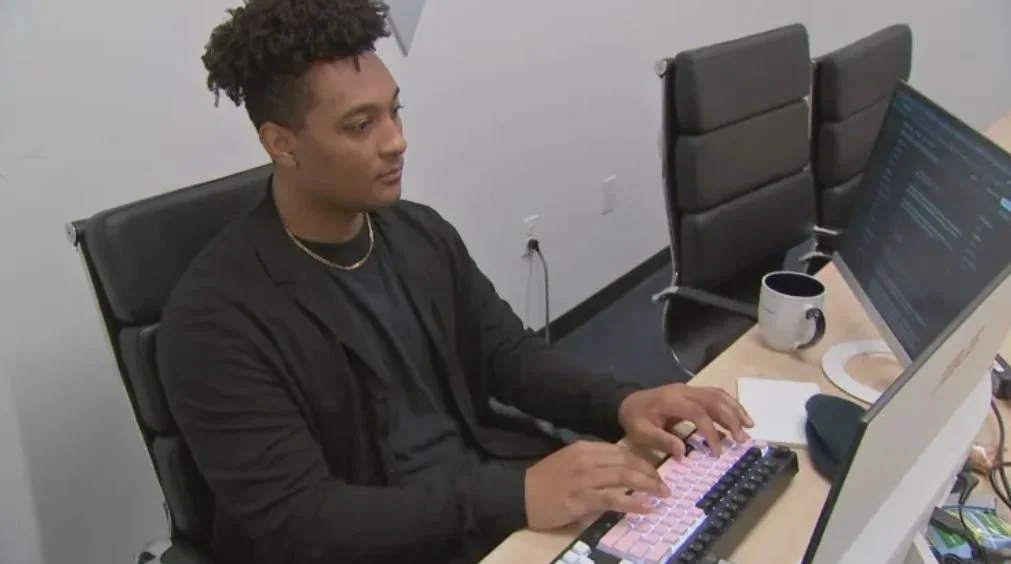
A one-year program at The Marcy Lab School in Brooklyn is providing an alternative path for Black and Latino students to launch a career in the tech industry.
Support from foundations and corporate sponsors make the program free for students.
A four-year college degree is still a standard requirement for the majority of software engineering jobs, according to the Burning Glass Institute.
College can be difficult and expensive for all students, but for many young people of color, those challenges can seem insurmountable. The Marcy Lab School in Brooklyn, New York, however, has created an alternative path — a one-year program to help students get lucrative tech jobs that typically go to college graduates with a four-year degree.
“The story that’s not often told is what happens when a young person gets to college, and what we learned was that college wasn’t serving our students,” said Maya Bhattacharjee-Marcantonio, co-founder of The Marcy Lab School.
Bhattacharjee-Marcantonio and co-founder Reuben Ogbonna are former teachers who met through the Teach for America program and share a passion for education that goes beyond coding and software engineering skills.
“High-quality instruction and emphasis on community identity development and leadership development is what makes Marcy special,” Ogbonna said.
The program started in 2019 with nine students, and its classrooms are named after each of those first grads as a way to build a connection with the current students, who now number 67.
Their eight-hour school day starts with mindfulness: meditation, journaling and goal-setting. The curriculum focuses on teaching engineering skills, coding and networking.
The co-founders worked with the local community to design a program to prepare students for upwardly mobile careers. They started with the tech sector and the support of several foundations, including Tiger Global Impact Ventures, Charles Hayden Foundation and Bedford Stuyvesant Restoration Corporation. They also have dozens of companies that support, train and hire graduates, including JP Morgan Chase, WW International and Squarespace.
“Spending years with our students has led them to see them as not only students who have a ton of potential but can be true hiring pipelines for their organizations,” said Ogbonna.
The program is also about building community and self-assurance. “I’ve learned to really advocate for myself and have this level of confidence, because Marcy provided that for me,” said Aneika Nanton, who is a student currently completing a paid internship with WW International as part of the program.
The school, still in its early stages, boasts an 80% completion rate. The average graduate receives a starting salary of $106,500.
“There are many students who are going to go to colleges that have graduation rates that are in the 30s or 40s [percentiles], that have average salaries for their graduates that are just above minimum wage,” Ogbonna said. “What I’d say is that those students aren’t getting a strong return on their investment.”
“We think The Marcy Lab School can scale to thousands of students here in New York City, and potentially have impacts across the country,” said Ogbonna.
An increasing number of organizations have embraced the idea of skills-based hiring as the answer to obtaining the talent they need. But the percentage of jobs that require a four-year degree has actually increased. Last year, 57% of job postings for software developers/engineers required a bachelor’s degree, up from 51% five years ago, according to an analysis by data research company Burning Glass Institute.
“When it comes to actually hiring, it’s really tempting to cling to what’s most comfortable,” said Matt Sigelman, president of the Institute…

COMPUTERWORLD: Skills-based hiring continues to rise as degree requirements fade
February 24, 2023
By Lucas Mearian
Skills-based hiring continues to rise as degree requirements fade
A growing number of organizations are dropping traditional college degree requirements in favor of skills gained through alternative methods — and soft skills that are more innate than learned.
More employers are leaving behind college degree requirements and embracing a skills-based hiring approach that emphasizes strong work backgrounds, certifications, assessments, and endorsements. And soft skills are becoming a key focus of hiring managers, even over hard skills.
Large companies, including Boeing, Walmart, and IBM, have signed on to varying skills-based employment projects, such as Rework America Alliance, the Business Roundtable’s Multiple Pathways program, and the campaign to Tear the Paper Ceiling, pledging to implement skills-based practices, according to McKinsey & Co.
“So far, they’ve removed degree requirements from certain job postings and have worked with other organizations to help workers progress from lower- to higher-wage jobs,” McKinsey said in a November report.
Skills-based hiring helps companies find and attract a broader pool of candidates who are better suited to fill positions the long term, and it opens up opportunities to non-traditional candidates, including women and minorities, according to McKinsey.
At Google, a four-year degree is not required for almost any role at the company — and a computer science degree isn't required for most software engineering or product manager positions. “Our focus is on demonstrated skills and experience, and this can come through degrees or it can come through relevant experience,” said Tom Dewaele, Google’s vice president of people experience.
Similarly, Bank of America has refocused its hiring to use a skills-based approach. “We recognize that prospective talent think they need a degree to work for us, but that is not the case,” said Christie Gragnani-Woods, a Bank of America global talent acquisition executive. “We are dedicated to recruiting from a diverse talent pool to provide an equal opportunity for all to find careers in financial services, including those that don’t require a degree.”
Hard skills, such as cybersecurity and software development, are still in peak demand, but organizations are finding soft skills can be just as important, according to Jamie Kohn, research director in the Gartner Research’s human resources practice.
Soft skills, which are often innate, include adaptability, leadership, communications, creativity, problem solving or critical thinking, good interpersonal skills and the ability to collaborate with others.
“Also, people don’t learn all their [hard] skills at college,” Kohn said. “They haven’t for some time, but there’s definitely a surge in self-taught skills or taking online courses. You may have a history major who’s a great programmer. That’s not at all unusual anymore. Companies that don’t consider that are missing out by requiring specific degrees.”
A lessening of 'degree discrimination'
From 2000 through 2020 “degree discrimination,” cost employees who were skilled through alternative routes 7.4 million jobs, according to Opportunity@Work, a Washington-based nonprofit promoting workers who are skilled through alternatives routes. Alternative routes include skills learned on the job, in the military, through training programs, or at community colleges, for example.
“They are among our country’s greatest under-valued resources — the invisible casualties of America’s broken labor market — where low-wage work is often equated with low-skill work and the lack of a degree is presumed to be synonymous with a lack of skills,” Opportunity@Work explains on its site.
Over the past few years, however, job postings with a degree requirement have dropped from 51% of jobs in 2017 to 44% in 2021, according to the Burning Glass Institute….

TECHSPOT: Did you know you might not need a degree to get a top tech job?
February 17, 2023
By Kirstie McDermott
The college route isn't for everyone: it's eye-wateringly expensive, for one thing. In America, the average cost of attendance for a student living on campus at a public four-year university is $25,707 per year or $102,828 over four years, according to Education Data Initiative.
The numbers are even bleaker for out-of-state students, who pay $43,421 annually, or $173,684 over four years of education. Private, non-profit students pay a huge $218,004 over four years.
More figures estimate that those who are unable to work full-time while studying stand to lose a median annual income of $42,068, and once students' graduate, they are paying an average of $2,186 in interest each year – with the average student borrower spending about 20 years paying off their loans.
Move away
Within tech, there is an increasing move away from requiring prospective candidates to have a college degree. Research from Harvard Business School and The Burning Glass Institute found that in November 2022, 41% of U.S.-based job postings required at least a Bachelor's degree – a 5% drop from early 2019…

HR DIVE: As skills become obsolete at a ‘breathtaking’ pace, risk and project management remain solid L&D investments
February 10, 2023
By Ginger Christ
Dive Brief:
Skills like risk management and project management are solid investments because the cost to develop these skills is high but the payoff can last as long as a person’s entire career, according to a Feb. 9 Skills Compass Report 2023 from Coursera and The Burning Glass Institute.
“Thirty-seven percent of the average job’s skills have been replaced just over the past five years,” Matt Sigelman, president of the Burning Glass Institute, said in a blog post. “Such a breathtaking pace of change makes it very difficult to determine which skills to invest in or how different training options will pay off.”…